


Every Assessment Capability. One Governed Platform.
From preparation and delivery to evaluation, outcomes, accreditation and academic intelligence, explore the 31 capability areas that make up DigiAssess, organized into nine pillars.
Assessment Preparation
Plan, design, review and align assessments before they reach students, with governed question banks, blueprints and frameworks.

Assessment Delivery
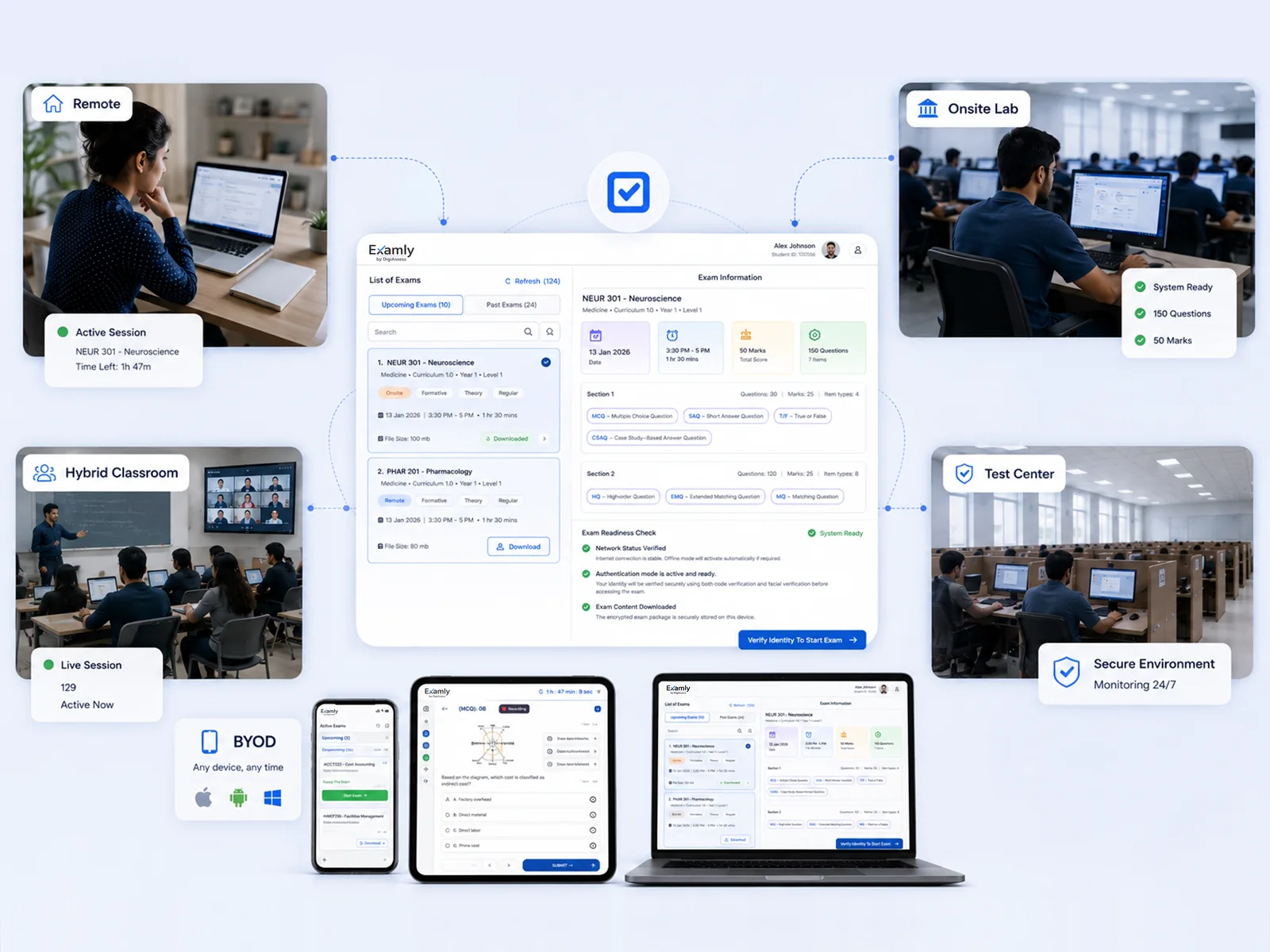
Deliver secure assessments across every environment, and run the operations, integrity and continuity behind them.

Assessment Types
Measure what matters: learning outcomes, competencies, and the stakeholder evidence that validates them.

Paper-Based Assessment
Bring paper answer scripts into the same evaluation, moderation and evidence workflows as digital assessment.
Paper-based assessment is supported through the same evaluation capabilities that apply to digital responses: AI answer key generation, anonymous evaluation, moderation and review workflows, and evaluation quality control. Physical answer scripts are digitized with DigiScanner.
- Digitize with DigiScanner. Capture physical answer scripts by mobile or scanner and bring them into the digital evaluation workflow.
- Anonymous evaluation. Hide learner identity during marking to reduce bias.
- Moderation and review. Second review and approval for high-stakes papers.
- Evaluation quality control. Check marking consistency before results are published.
- Same evidence trail. Paper and digital results feed the same outcome, competency and accreditation reports.
Digital and AI Evaluation
Make evaluation a governed, scalable operation with AI assistance, evaluator workflows and moderation.

Evaluation runs as one governed workflow for digital and paper responses: AI assists with answer keys, marking recommendations and feedback, evaluators make the decisions, and moderation and quality control happen before results are published.
- AI answer key generation. Model answers and evaluation guidance created from the questions.
- Rubric-based and rubric-free AI evaluation. Marking recommendations aligned to approved rubrics, or to AI-generated answer intelligence when no rubric exists.
- Marking justification. Evaluators see why a mark was suggested and decide the final mark.
- Evaluation allocation and cross-campus workflows. Assign work by campus, college or department, or across campuses by policy.
- Anonymous evaluation, moderation and quality control. Fair, consistent and reviewed before publication.
- Progress monitoring and analytics. Live visibility of completion, workload, bottlenecks and evaluation trends.
- AI-assisted feedback. Draft feedback for learners based on performance, which faculty review and approve.
Outcome & Competency Intelligence
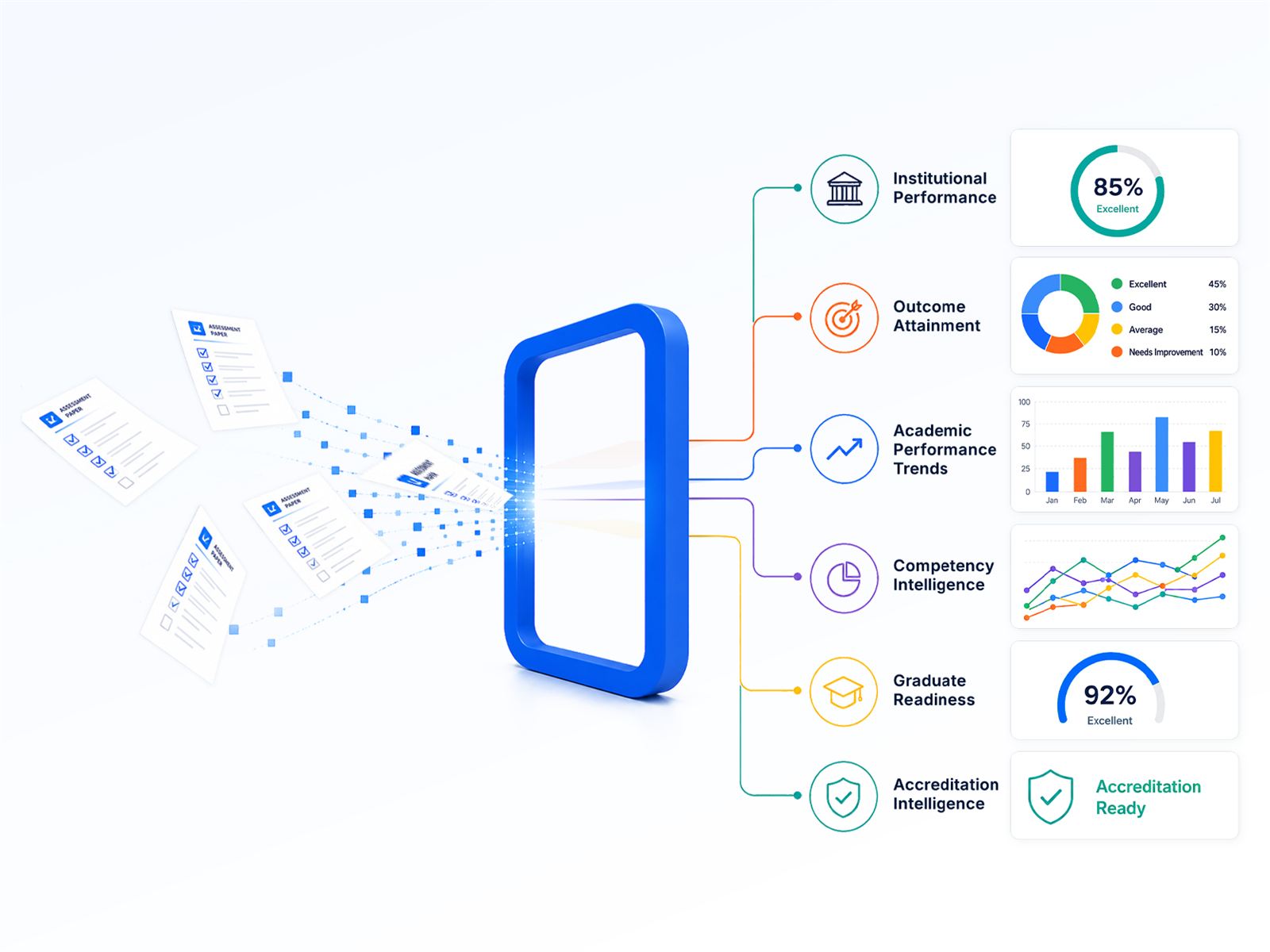
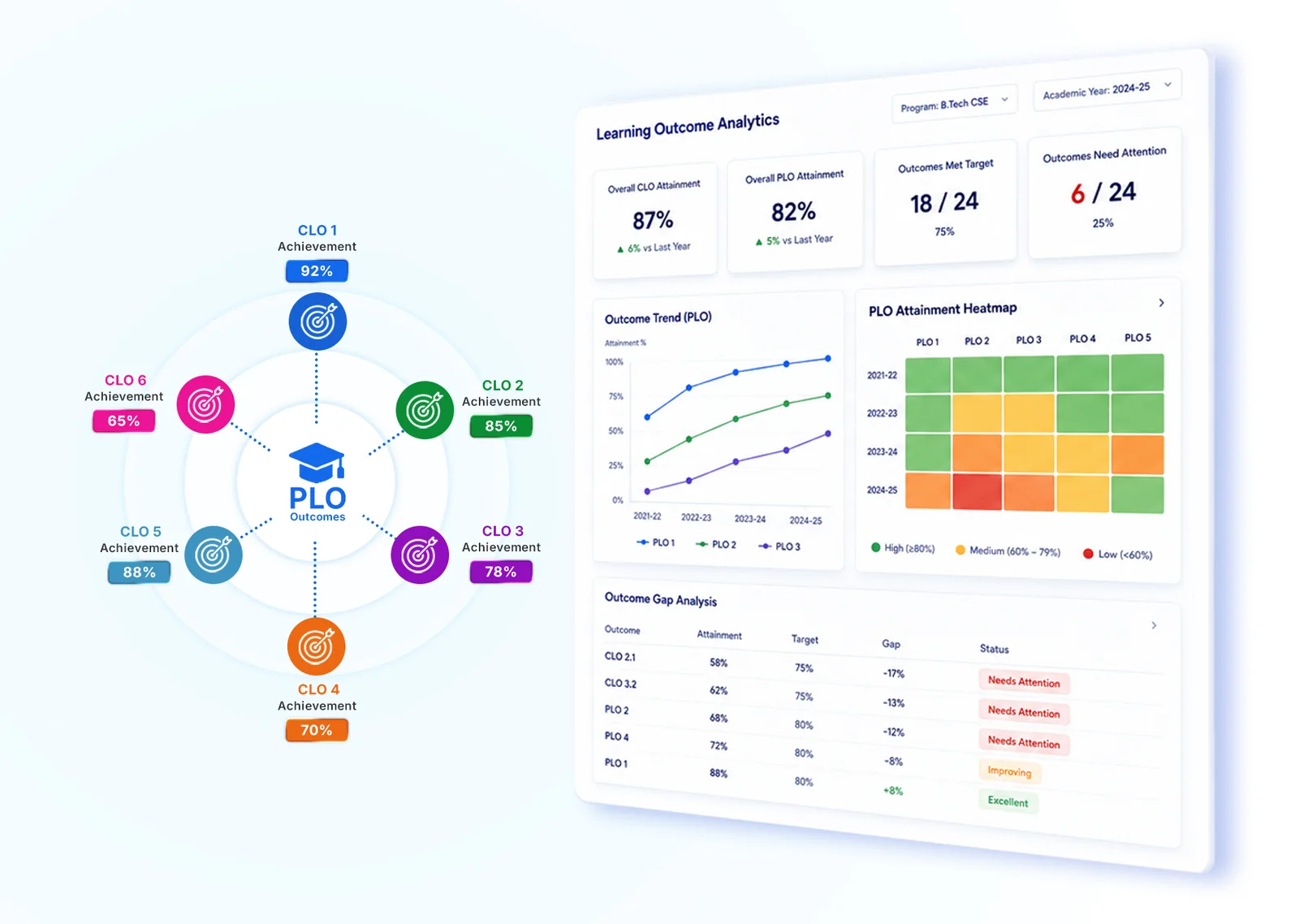
Turn assessment results into evidence of what learners, cohorts and programs are achieving.
Healthcare Education
Clinical, practical, workplace and portfolio assessment across the full health professions journey.

Accreditation Intelligence
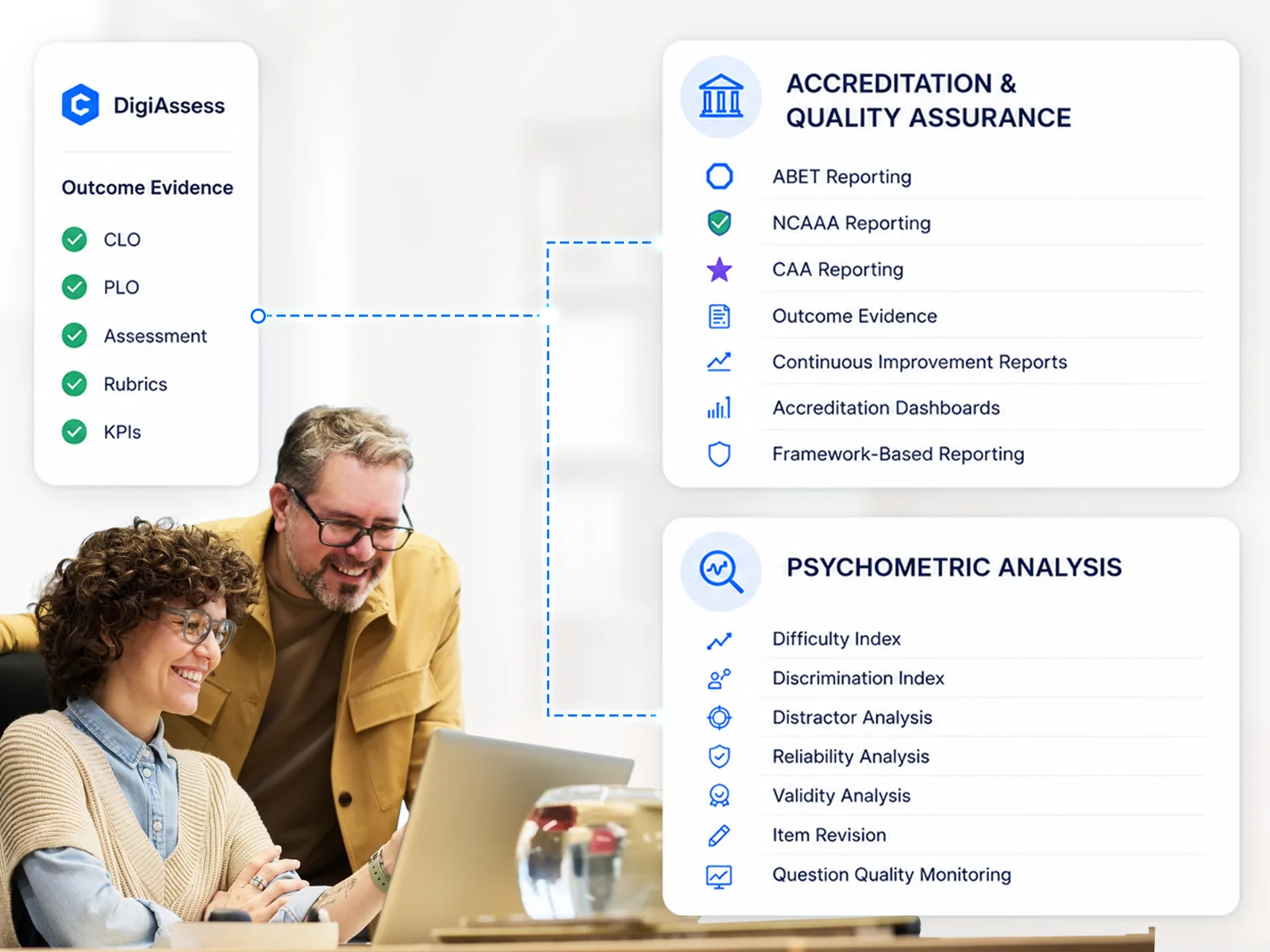
Keep accreditation evidence and assessment quality continuously ready, not assembled at the last minute.
Academic Intelligence
Give leaders decision-ready intelligence across outcomes, competencies, quality and performance.

The Difference Is Structural, Not Incremental.
See how a unified, governed assessment system compares with LMS-based tools, standalone exam tools and proctoring tools.
