

Competence Is Built Across Years.
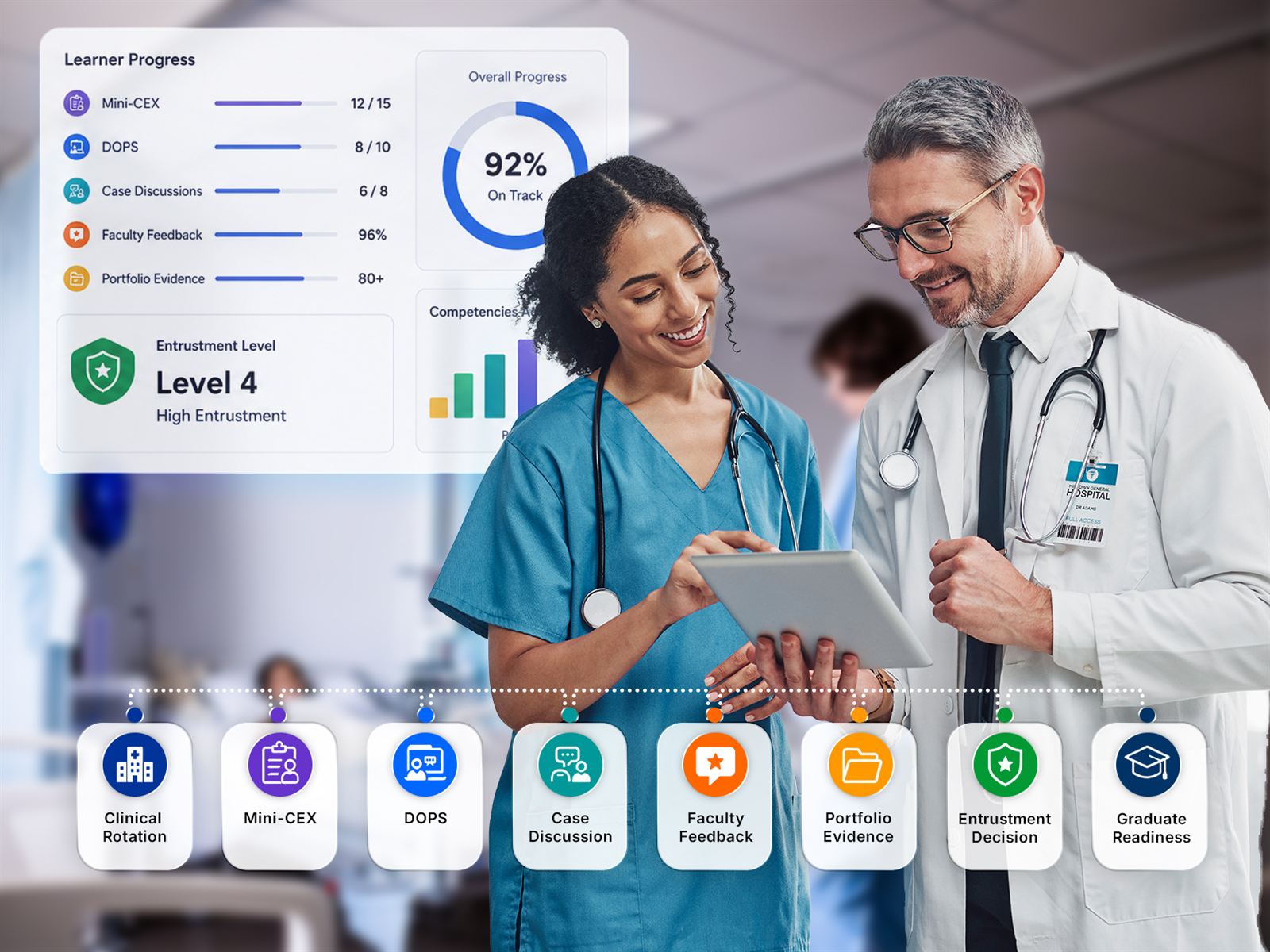
Assessment should see the whole journey. Connect theory, OSCE and OSPE, practical assessment, portfolios, workplace observation and EPA evidence into one longitudinal view of progression.
- OSCE
- Mini-CEX
- DOPS
- EPA
- Competency Progression
Knowledge Is Only One Part of Competence.
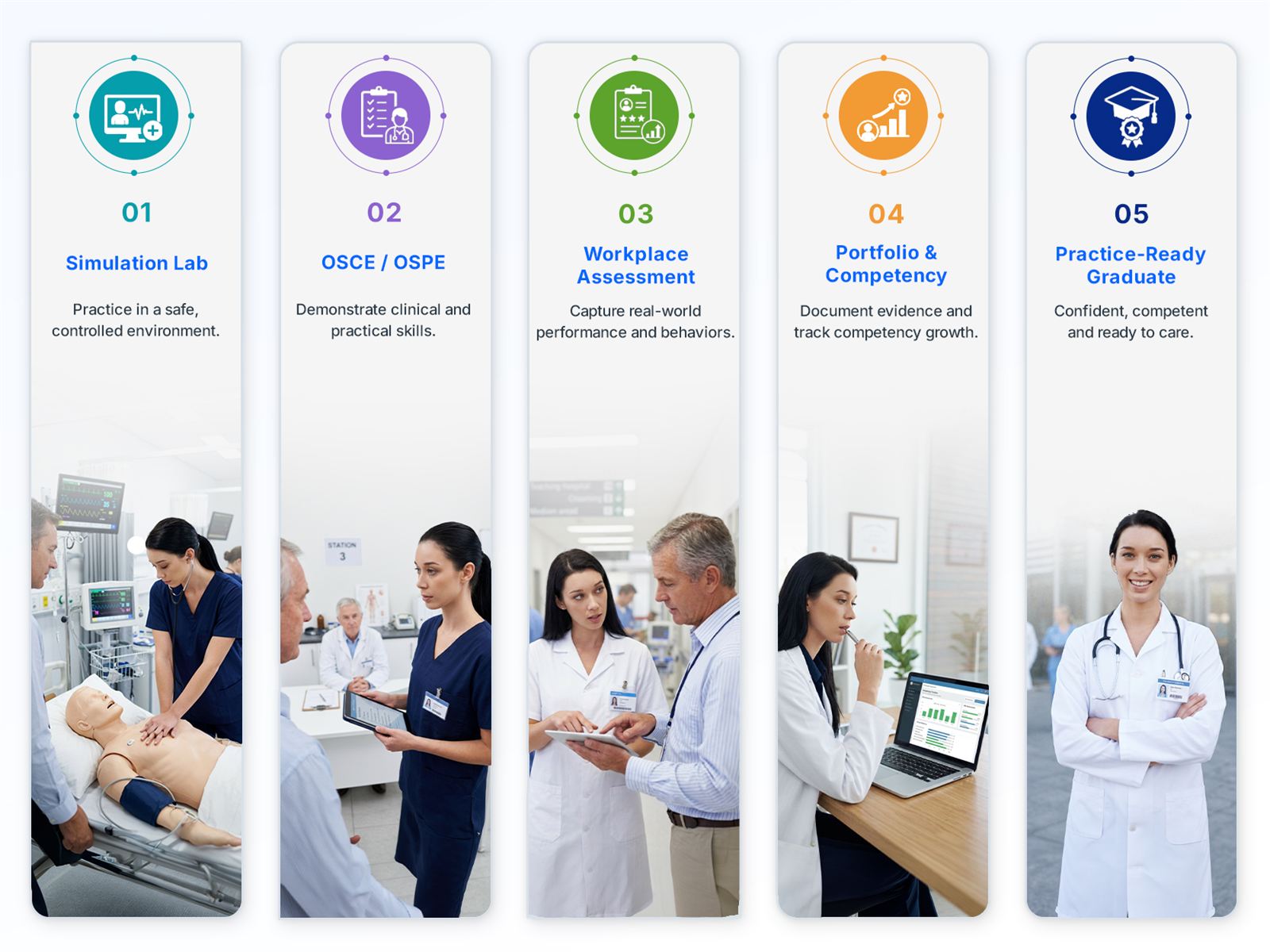
A learner may perform well on a written exam and still need evidence of practical, clinical and professional capability. Each environment contributes to one progression story.
Knowledge and Clinical Reasoning
Secure digital exams with item types built for medical education, mapped to outcomes and competencies so every question contributes evidence.
- Cardiovascular block examCLO 2.1 · 2.3 evidenced
- Renal case-based assessmentClinical reasoning: 78%
- Pharmacology progress testTrend: improving
- Item analysis reviewed2 items revised
Sample evidence for illustration.
Observed Clinical and Practical Performance
OSCE and OSPE stations, skills labs and structured observation, with rubrics and evaluators coordinated through OSSAI.
- OSCE station 3: history takingCompetent
- OSCE station 5: data interpretationDeveloping
- Suturing skills labRubric: 4 of 5
- Simulation debriefFeedback recorded
Sample evidence for illustration.
Performance in Real Clinical Settings
Workplace-based assessment captured where care happens, with supervisor judgment recorded against the competencies it evidences.
- Mini-CEX, internal medicineSupervisor feedback recorded
- DOPS: venipunctureEntrustment level 3
- Case-based discussionLinked to EPA 2
- Rotation sign-offPending supervisor
Sample evidence for illustration.
Longitudinal Evidence and Reflection
Logs, reflections, certificates and feedback build a continuous record, validated by faculty and linked to competencies and EPAs through DigiPortfolio.
- Clinical log: 42 entriesValidated by faculty
- Reflection: patient communicationLinked to EPA 1
- Patient feedbackRecorded
- Mid-year portfolio reviewProgressing
Sample evidence for illustration.
One Progression Story, From Simulation Lab to Skill Readiness.
Simulation, OSCE and OSPE, workplace assessment and portfolio evidence stop living in separate tools. Faculty see one competency profile that grows with the learner.
A Station Is a Moment. Competence Is a Journey.
Run OSCE and OSPE circuits as a coordinated operation, then connect station performance to competency development across courses and rotations.
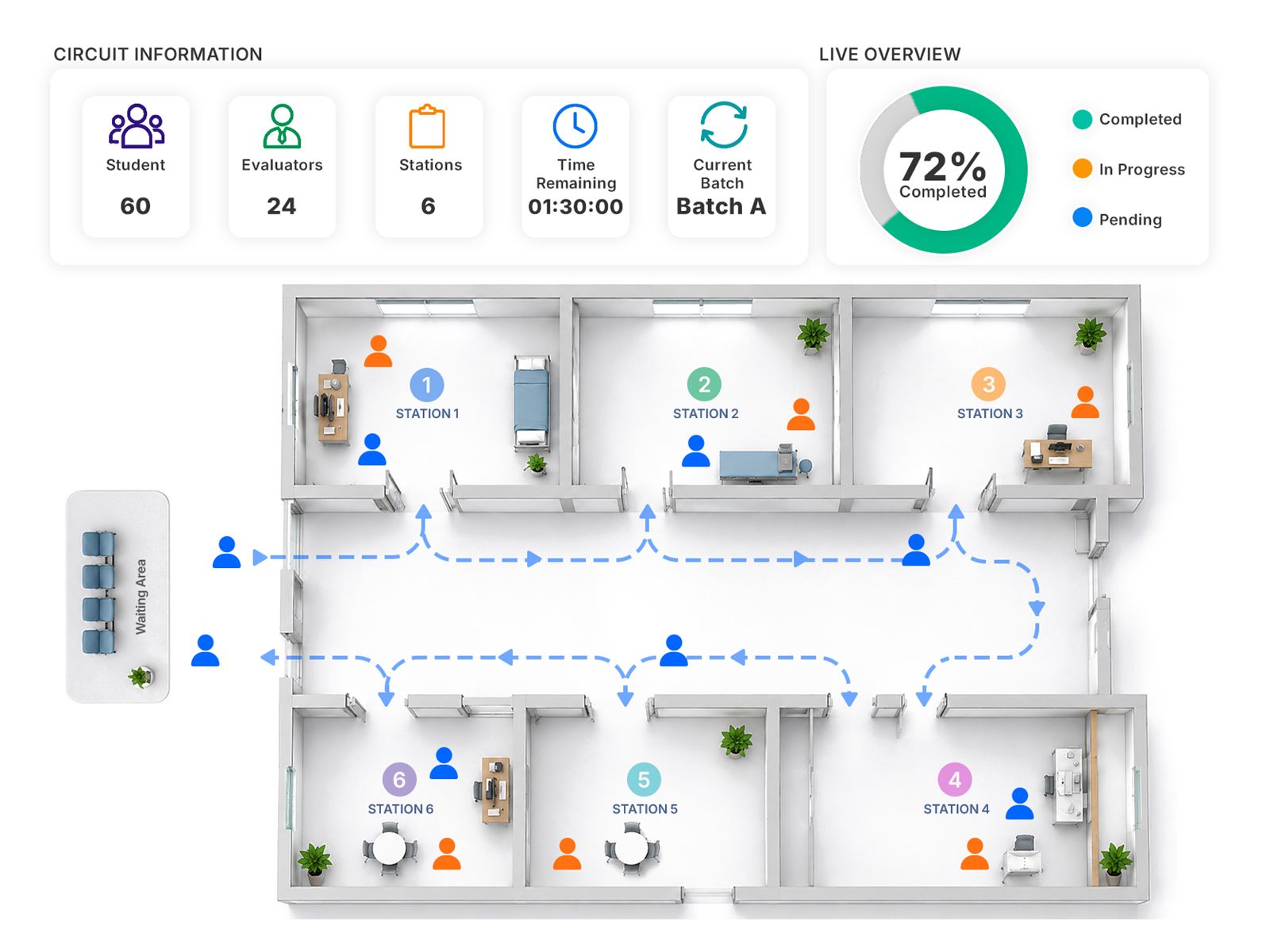
- 1History takingCommunication · EPA 1Competent
- 2Physical examinationClinical skills · EPA 1Competent
- 3Breaking bad newsProfessionalismDeveloping
- 4SuturingProcedural · EPA 12Competent
- 5Data interpretationReasoning · EPA 3Developing
- 6Patient counselingCommunicationCompetent
Station evidence flows into the learner's competency profile and EPA progression.
Make EPA Progression Visible.
Map programs, courses and assessment evidence to EPAs, competencies and milestones. Evidence can come from theory exams, OSCE and OSPE, portfolios, workplace assessments and clinical rotations.
Gather a history and perform a physical exam
- OSCE station: history takingCompetent
- Mini-CEX × 3Internal medicine, pediatrics
- Clinical logbook12 linked entries
- Clinical skills examTheory evidence
Prioritize a differential diagnosis
- Case-based examClinical reasoning
- Case-based discussion × 2Supervisor rated
- OSCE station: data interpretationDeveloping
- Supervisor assessmentEvidence needed
Recommend and interpret common tests
- Pathology theory examTheory evidence
- Lab practicalRubric: 3 of 5
- Workplace observationEvidence needed
- Portfolio reflectionEvidence needed
Enter and discuss orders
- Portfolio reflectionLinked
- Simulation scenarioFeedback recorded
- Mini-CEXEvidence needed
- DOPSEvidence needed
Perform general procedures
- DOPS × 4Entrustment level 4
- Simulation labCompetent
- Clinical logbookProcedures validated
- Supervisor sign-offComplete
Illustrative EPA framework and sample learner data. Configure the competency framework, EPAs and milestones your program uses.

Competency Lives Beyond the Exam.
Capture workplace observation, feedback and reflection where learning happens, then validate it and connect it to the competencies it demonstrates.
- Activity: logs, procedures, cases and reflections.
- Observation: Mini-CEX, DOPS and supervisor assessment.
- Feedback & validation: faculty review and sign-off.
- Competency: linked to EPAs, milestones and readiness.
See Progression at Every Level.
Review competency progression for an individual learner, a course or year, and the whole program, and see where evidence is still missing before it becomes a finding.
- Learner-level progression and readiness.
- Course and year summaries, where configured.
- Program-level outcome and EPA views.
- Gaps and insufficient evidence flagged for faculty.
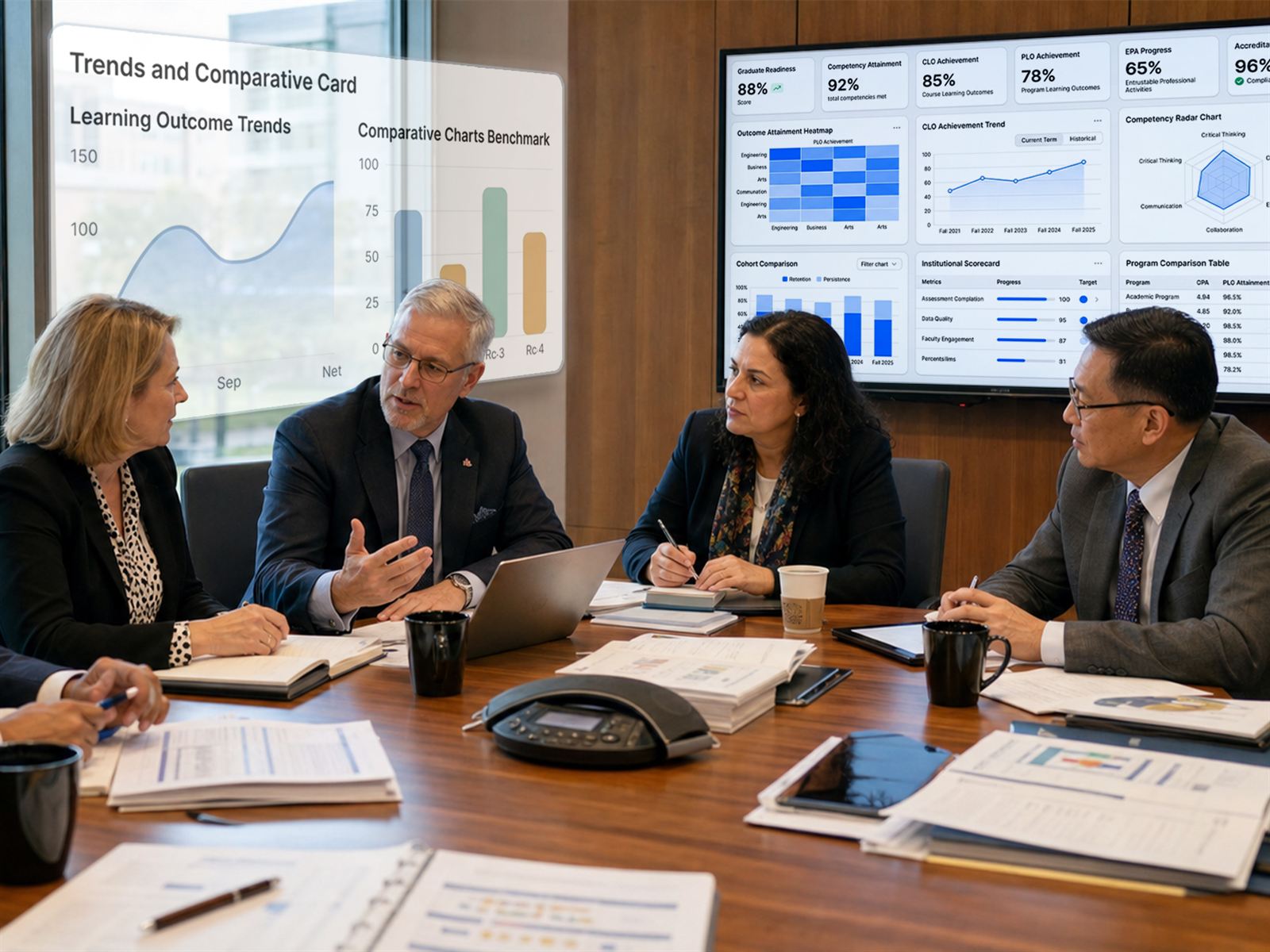
Assessing clinical and workplace competence? See workplace-based assessment, EPA progression tracking and OSCE and OSPE management.
Show Us How Your Program Assesses Competence Today.
Bring your curriculum, OSCE model and competency framework. We'll show you the connected evidence view.