
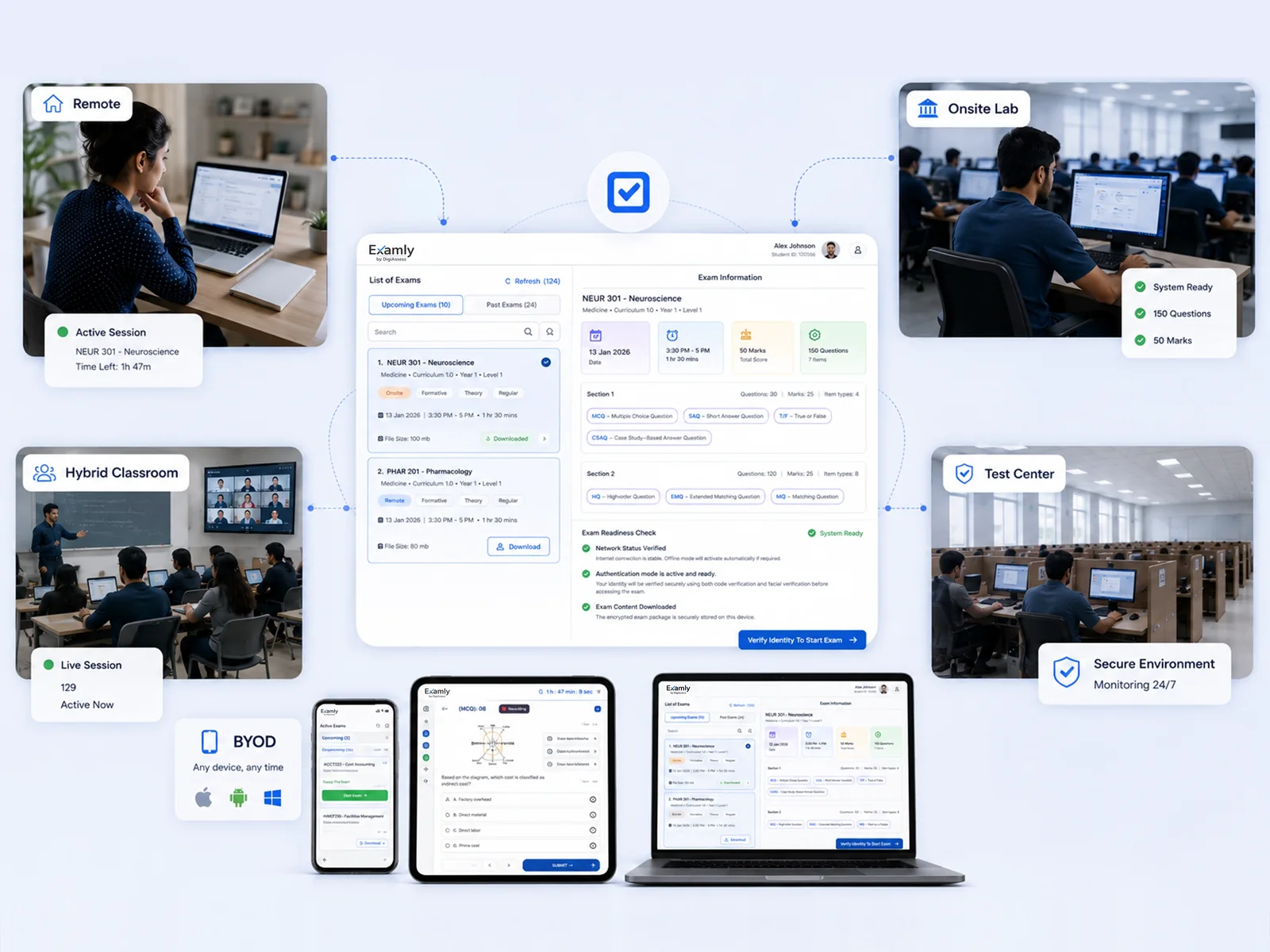

Digitize the Policy. Not Just the Paper.
Turn academic regulations into controlled workflows across planning, question governance, scheduling, delivery, evaluation and moderation, without abandoning the policies your institution already has.
 Plan
Question governance
Scheduling
Live operations
Start With the Academic Structure. Not the Exam.
Assessment is hard to govern when programs, courses and topics are recreated inside every workflow. DigiAssess starts from your academic structure, so planning, mapping and reporting all work from the same context.
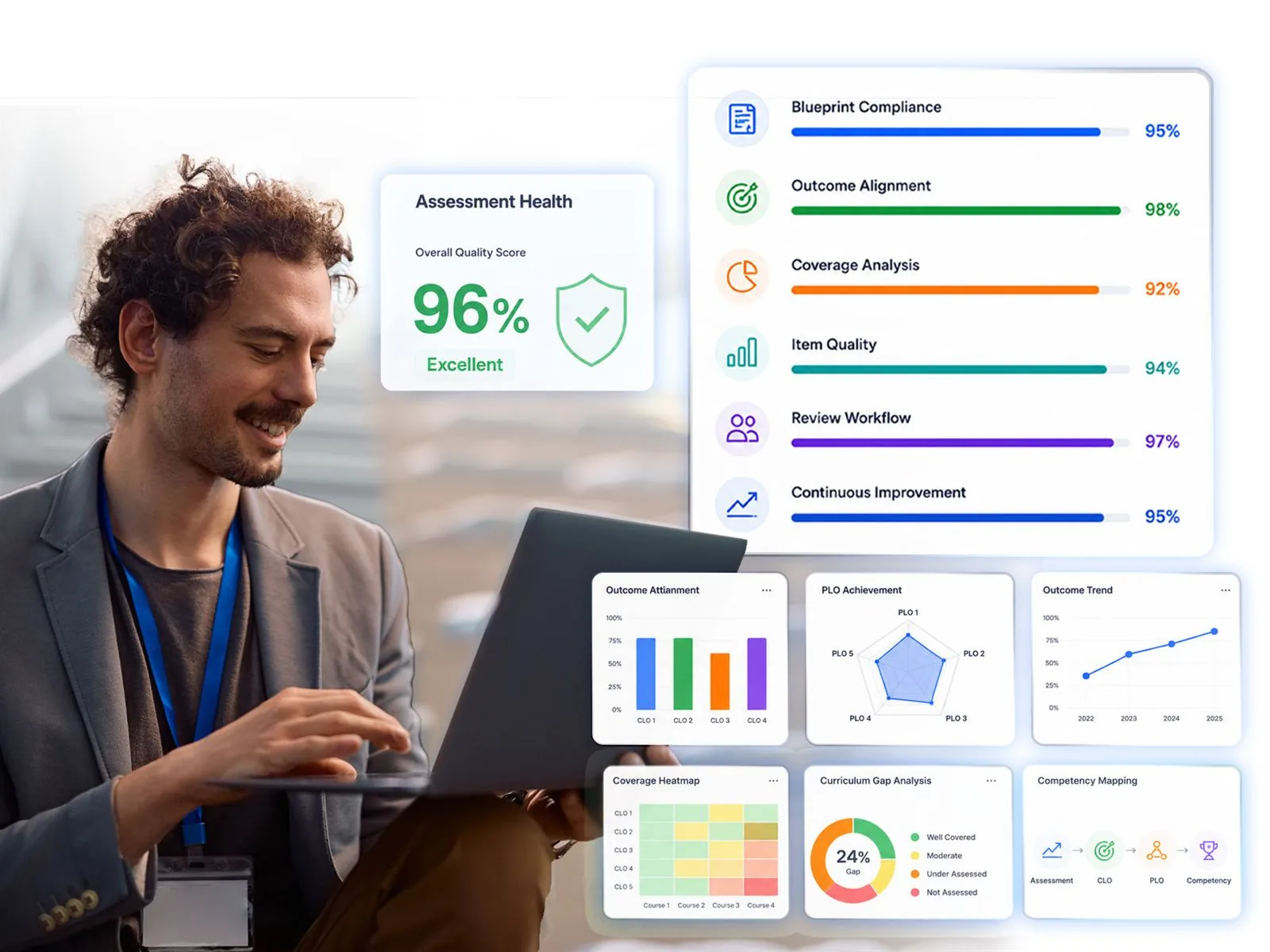
Validate the Assessment Before Learners See It.
Blueprints, item selection and student-facing settings are often checked across separate documents. Bring them into one structured workflow, so the assessment is verified before exam day.
- 1Blueprint
- 2Items
- 3Review
- 4Paper
- 5Student preview
- ✓Ready
- Blueprint alignment validation and outcome mapping.
- Dynamic question-paper generation with reviewer collaboration.
- Preview exactly what students will see, before delivery.
Questions Are Institutional Knowledge.
Build governed repositories with ownership, classification, review and approval, and protect the bank from duplication as well as exposure.
Q-04821 · A patient presents with crushing chest pain radiating to the left arm. What is the most appropriate first investigation?
Current state: Draft · sample item
One Assessment. Different Responsibilities. Clear Control.
Assessment moves through many hands. Granular, policy-driven permissions keep every participant working within the responsibilities of their stage.
Scheduling Should Resolve Constraints. Not Create New Ones.
Timetables break when courses, learner overlaps, faculty, rooms and devices are planned separately. Centralized scheduling detects conflicts across courses, programs and campuses.
- Centralized and automatic scheduling.
- Student-overlap, faculty and room conflict detection.
- Device-availability tracking and resource optimization.
Illustration with sample data.
Turn Seating Into an Integrity Control.
Even when candidates are in the room, seating, spacing and proctor allocation create complexity. Apply institution-defined rules and the plan updates, ready to export.
- Condition-based seat allocation and integrity-gap spacing.
- Proctor workload balancing and real-time reassignment.
- Internet-failure handling and recovery.
Give Operations Teams Control While the Assessment Is Still Live.
Exceptions are hardest to manage when teams only see them afterward. Authorized staff get specific, recorded controls during the session.
- Automatic start at the scheduled time
- Permission-based late entry
- Individual time extension
- Countdown and unsaved-response alerts
- Exam reset for approved technical incidents
- Real-time intervention and violation monitoring
- Coordinator application
- Dedicated proctor interface
A Result Can Change. The Decision Trail Shouldn't Disappear.
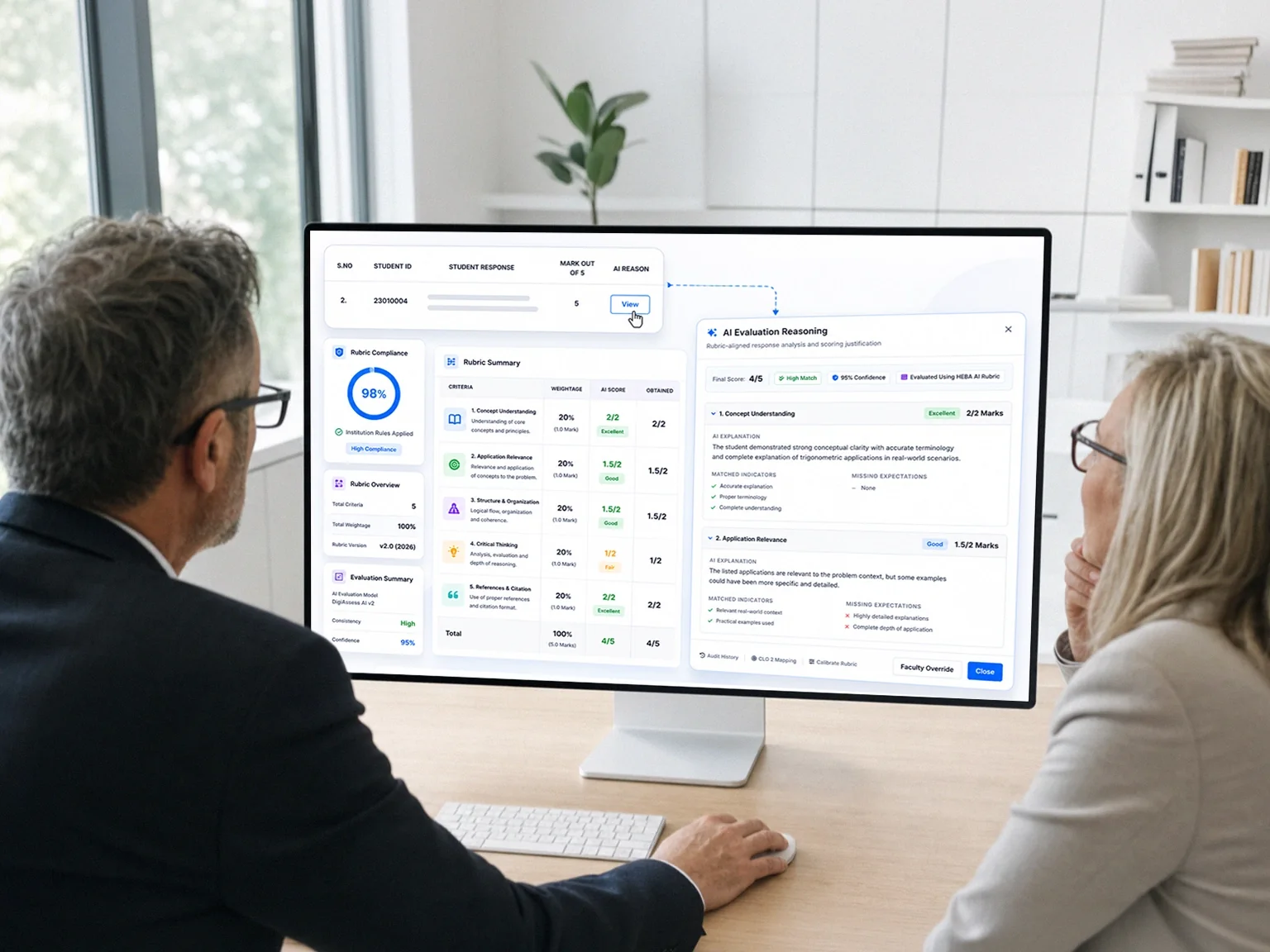
Answer keys, invalid questions and re-evaluations can change results after an assessment. Controlled recalculation and traceability keep the final result defensible.
- Answer-key revision with automatic recalculation.
- Re-evaluation controls and result reversion.
- Invalid-question handling and mark redistribution.
- Extra-marks allocation with an audit trail.
- Consolidation of external assessment data.
- 1Original resultMidterm released to candidates68 / 100
- 2Approved adjustmentQ14 answer key revised by the exam committeeApproved
- 3RecalculationAll affected candidates recalculated automaticallyAutomatic
- 4Final resultPublished with full decision history72 / 100
Illustration with sample data.
Setting up assessment governance? See governed assessment workflows, assessment lifecycle management and question bank management.
Governance Creates Confidence.
Clear roles, policy-driven steps and traceability show your assessment process is governed, not improvised. Next question: can you trust delivery?