
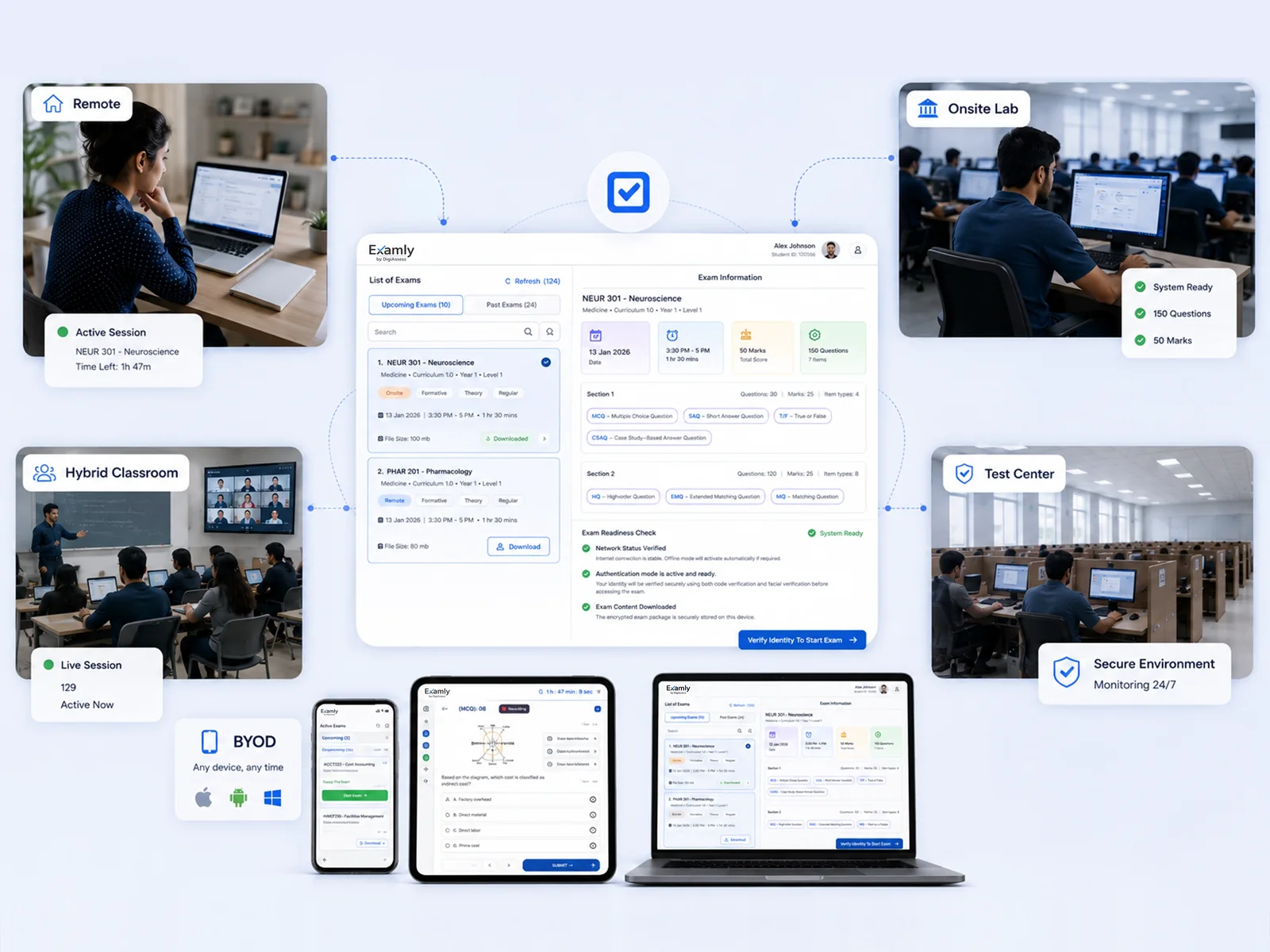


Better Assessment Starts With Better Questions.
Guides, perspectives and practical detail for institutions rethinking assessment governance, integrity, outcomes, integration and quality.
Governance connects policy, process and data, not just exam execution. A checklist across seven dimensions, and how to audit your current gaps before transformation begins.
Read the guideResource library
 Ensuring Examination Continuity When Conditions Are Uncertain
Five approaches universities and colleges use to keep exams running with control and integrity, and the risk of each.
Read the article →Examination Continuity Checklist: Choosing the Right Digital Assessment PlatformA practical checklist for reviewing whether your assessment environment keeps exams secure, controlled and on schedule.
Open the checklist →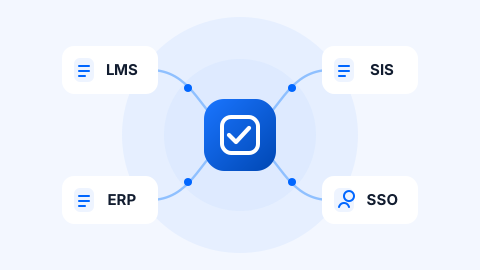 Beyond the LMS: The Emerging Need for a Dedicated Assessment Layer
Why modern higher education needs a third foundation beside the SIS and LMS for assessment governance and outcomes.
Read the article →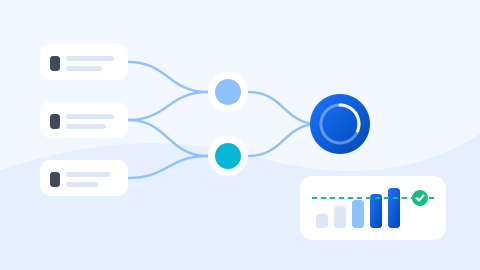 From Fragmented Assessment Tools to Academic Digital Excellence
DigiAssess compared with LMS-based tools, standalone exam tools and proctoring tools, with a 25-question institutional readiness framework. PDF, 38 pages.
Get the comparison →AOS: The AI-Powered Assessment Operating SystemA whitepaper defining the governed assessment layer that completes the academic digital ecosystem. PDF, 67 pages.
Read the whitepaper →Outcome & Competency Inventory (OCI): A Framework for Outcome IntegrityA framework for classifying the real condition of learning outcomes and competencies, with risk, recovery and compensation. PDF, 34 pages.
Read the framework →AI-Assisted Evaluation: Making Deeper, Descriptive Assessment SustainableManual evaluation pushes institutions toward simpler exams. How AI assistance makes deeper assessment workable, with faculty in control.
Read the article →The Digital Assessment Lifecycle: A Complete Guide for Higher EducationHow assessment measures learning, demonstrates outcome achievement and supports quality, from planning to improvement.
Read the guide →Governance-First Assessments in the AI EraMoving beyond exam security: how integrity, flexibility and AI-driven control build trust in digital exams.
Get the e-book → Why Universities Are Moving Toward Connected Digital Assessment
Managing written, practical, clinical and workplace assessment models across programs, in one connected platform.
Read the article → Digital Assessment Platform Features: 12 Essential Features
From assessment design and governance to AI, analytics, security, interoperability and accreditation.
Read the guide →7 Critical Challenges of Implementing Digital Assessment and How to Overcome ThemWhy successful implementation takes more than selecting a platform and moving exams online.
Read the guide →Digital Assessment Platform vs Online Examination SoftwareThe difference in scope, workflows, governance, analytics and university use cases.
Read the article →AI-Powered Assessment GovernanceConnecting fragmented assessment tools through governance to improve outcomes, evidence and academic quality.
Read the article →10 Benefits of Digital Assessment in Higher EducationFrom efficiency and feedback to learning outcomes, governance and accreditation.
Read the guide →10 Reasons Why Universities Are Shifting to Digital Assessment PlatformsSecure, efficient, scalable and data-driven exams, and why traditional systems are being replaced.
Read the article →Digital Assessment Platform: The Complete Guide for UniversitiesKey features, benefits, security, analytics, governance and implementation.
Read the guide →Beyond LMS: Why a Dedicated Assessment System Is Critical for High-Stakes ExamsAn LMS manages learning. High-stakes assessment needs integrity, governance, analytics and auditability alongside it.
Read the article →DigiVal Integration Framework: A Unified Architecture for LMS & SIS ConnectivityEvent-driven, scheduled API and legacy-connector integration modes, plus data-sovereignty patterns.
Read the article → Ibn Sina National College: Accreditation, Integrity and Quality in One Operating Model
Secure question banks, face authentication, item analysis and CLO/PLO reporting across programs.
Read the story →Overcoming Concurrency Challenges in Assessment SystemsHow assessment platforms stay stable during entrance exams and campus-wide concurrent sessions.
Read the article →10 Common Pain Points for Institutions and How DigiAssess HelpsOutcome gaps, documentation overload and longitudinal analysis: assessment as measurement, transparency and accountability.
Read the article →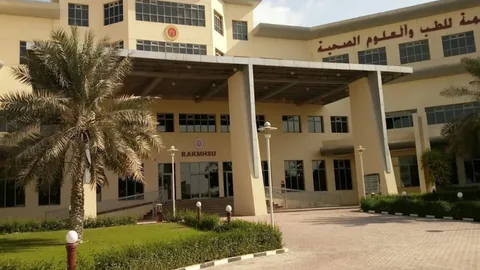 RAK Medical & Health Sciences University: Competency-Based Education in One Governed Ecosystem
Digital OSCE, workplace-based assessment and EPA monitoring replacing paper logbooks across five health programs.
Read the story →Sajil Technology: National Licensing Examination DeliveryInstallation-free, browser-based access that reduces operational complexity for national-scale examinations.
Read the story →FRCR Rapid: Aligning Specialist Training with Real Examination ConditionsA structured assessment environment that mirrors real FRCR conditions and frees trainers to focus on evaluation.
Read the story → University of Prince Mugrin: Transforming Assessment into Institutional Intelligence
DigiAssess, Examly, Reportly and HEBA AI across 119,000 assessment sittings a year, with continuous accreditation readiness.
Read the story →Effective Ways to Manage AssessmentsPlanning, question development, review, publication, conduct, result processing and quality analysis as one workflow.
Read the guide →Digital Assessment Solutions That Work in Every Learning EnvironmentOnline, in-person, hybrid and low-bandwidth delivery under one assessment standard.
Read the article →How a University Digitized 50,000 Exams SustainablyOnline and offline delivery, OSSAI and DigiPortfolio, with sustainability reporting in the operating model.
Read the story →Sree Balaji Medical College & Hospital: Secure, Reliable AssessmentsFace authentication, encrypted question banks and real-time dashboards to end proxy attendance and malpractice.
Read the story →Saudi Logistics Academy: Transforming Vocational Training AssessmentMulti-stage admissions testing for 9,000 applicants, plus rubric-based, personalized trainee assessment.
Read the story →The Benefits of Formative AssessmentAssessment as a continuous learning signal that triggers feedback and teaching adjustments before the course ends.
Read the article →How to Choose the Best Assessment ToolWhat to evaluate before selecting assessment technology: data needs, technology readiness and support for learning.
Read the article →How DigiAssess Solved an Automation ChallengeAn engineering story on automating assessment operations at scale.
Read the article →Online Assessment Tools That Work for InstitutionsInstitution fit, testing-center setup, live monitoring and simpler exam operations.
Read the article →Why Your Institution Should Choose DigiAssessAssessment as a way to understand learning, measure growth and improve teaching.
Read the article →A Closer Look at What Makes DigiAssess Stand OutAdapting to institutional workflows, and the efficiency that follows.
Read the article →Revamping Student Evaluation During COVIDA historical look at keeping assessment going as delivery environments changed.
Read the article →No resources on this topic yet. Ask us and we'll point you to relevant material.
Have a Question These Don't Answer?
Bring it to a conversation with our assessment specialists.