1 of 7
Difficulty Index
Measures how difficult each question was based on student performance.

Platform
Features
High-integrity digital exams that don't depend on continuous connectivity.
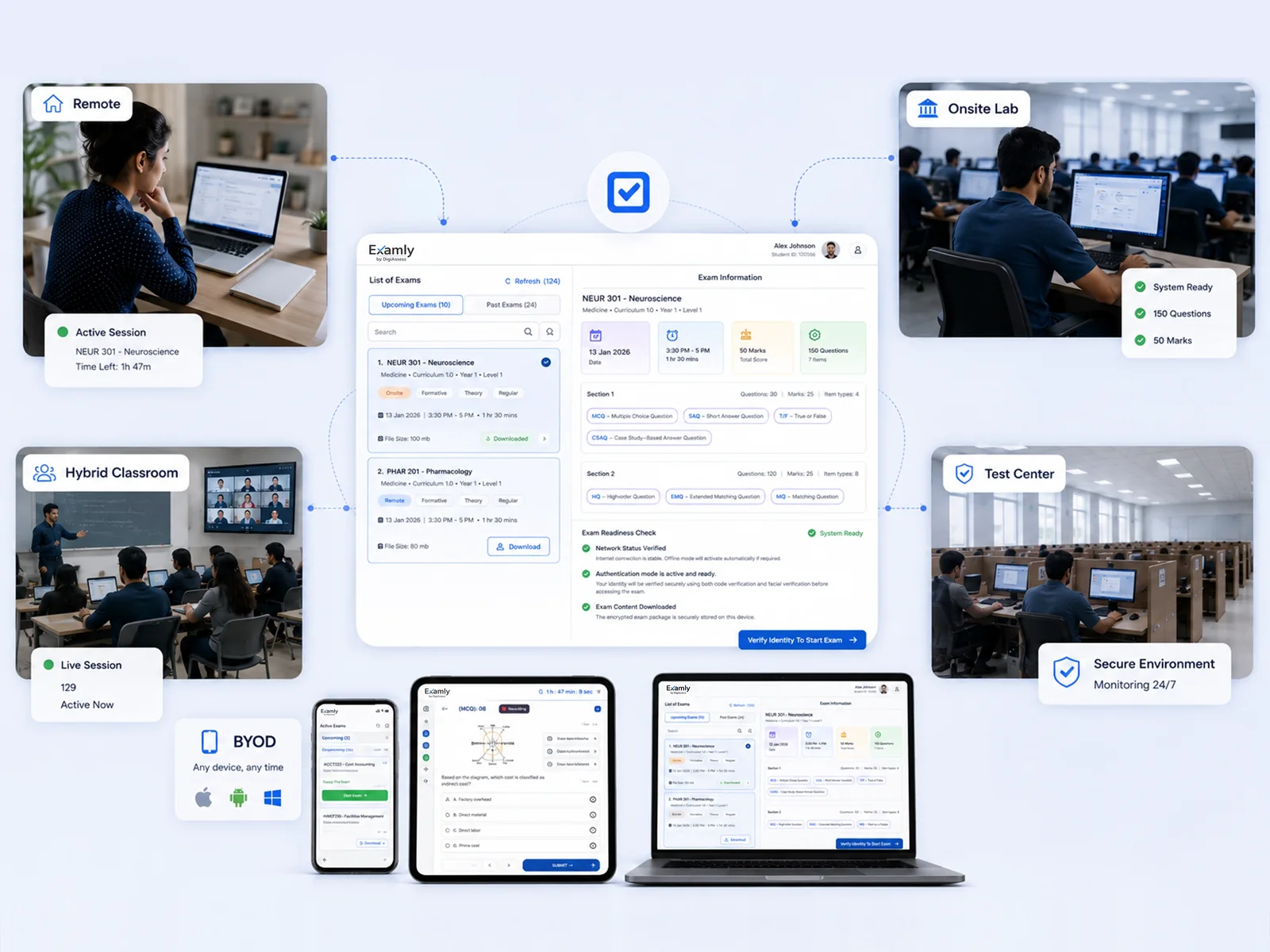 See offline assessment
How FRCR Rapid built a structured practice environment.
 Read the story
Specialist capabilities inside one connected evidence layer.
 See the ecosystem
Evidence-based item analysis, difficulty, discrimination and distractor review.
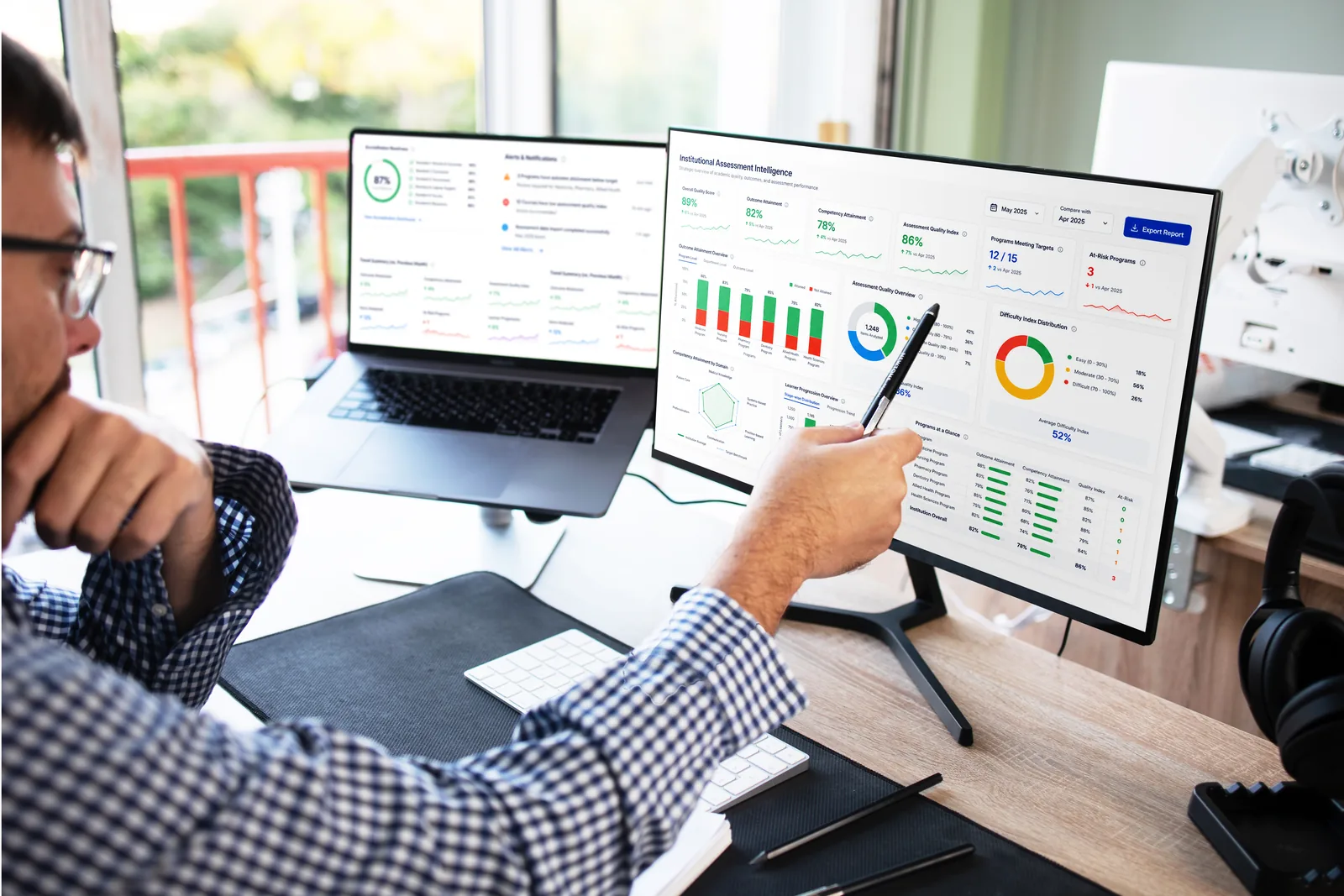
Institutions need to ensure that exam items are valid, fair, reliable, and academically defensible. Without psychometric insight, poor questions may affect student grades and assessment credibility.
DigiAssess supports item quality analysis including difficulty index, discrimination index, distractor analysis, item revision, and report-based decision-making.
7 capabilities, each with the value it brings. Use the index to jump between them.
Measures how difficult each question was based on student performance.
Shows how well an item differentiates between high-performing and low-performing students.
Analyzes incorrect answer choices to determine whether distractors are functioning effectively.
Supports evaluation of assessment consistency and confidence in results.
Helps academic teams review whether items align with intended learning outcomes, topics, and taxonomy levels.
Allows authorized users to revise answer keys, discard problematic items, redistribute marks, and compare original versus revised results.
Supports continuous improvement of the question bank over time.
General definitions of each measure and how academic teams normally act on it. They describe the measures listed above, not a certification of any specific formula.
See how item evidence feeds learning outcome analytics, assessment quality management and accreditation reporting, or manage the items themselves in question bank management.
Turning assessment evidence into outcomes and accreditation reports? See Academic Intelligence, outcome-based assessment and competency-based assessment.
Show us how your institution assesses today. We'll walk you through the workflows that matter to your programs.